Skip to content
De vulinstallatie van Air & Dive Supply

AIR & DIVE SUPPLY · MAGAZINE

Air Insights.

Stories. Knowledge. People. A cleaner ocean.

Behind the scenes and deeper into diving, breathing air and Nitrox. Straight from our filling station on Curaçao.

All articles

EXPLORE THE UNDERWATER WORLD

Latest stories.

A writer and an AI robot working together at a desk overlooking Curaçao.
Behind the scenes

Who Is Actually Writing This? On Authorship, Artificial Intelligence, and the Making of Air Insights

Who actually writes the articles for Air Insights? The obvious answer is: I do. Who I am and what my background is, I'll explain in this personal essay. But whether I'm really the one writing all those articles turns out to be a more complicated question. And the more I think about it, the less obvious the answer becomes. A critical reflection on writing in the age of AI.

30 min read
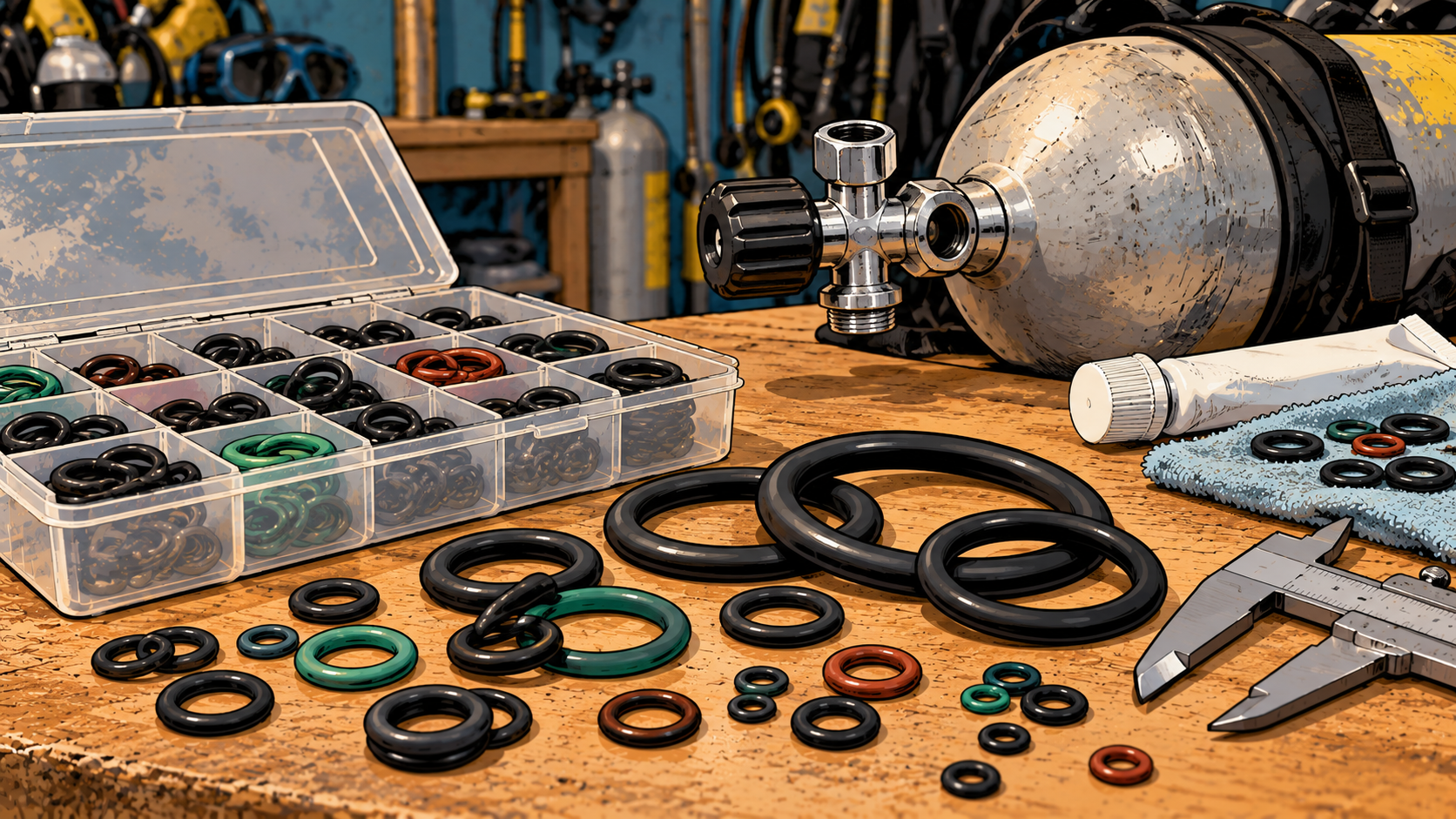
O-ringen op de werktafel
Technical Tales

O-ring: A Little Journey Around the World

An O-ring might be the simplest part of our diving equipment: a small rubber ring that keeps air and water where they belong. But behind this seemingly insignificant component lies a surprisingly rich story. From the rubber forests of South America and the brutal colonial rubber trade in Africa to the invention of the modern O-ring and the development of synthetic rubber, we take a little journey through world history. Along the way, we explore how O-rings work, why they come in so many different materials, hardnesses and sizes, and what designations like NBR, FKM, Shore A and AS568 actually mean. We also look at the practical side: why O-rings fail, when they need replacing and what matters when maintaining diving equipment. A whole world of history, chemistry and physics, hidden in a tiny rubber ring.

40 min read
Deel 4 van de vierdelige serie Cilinderologie: Hoe lang gaat een duikfles mee? – Onderhoud, keuring en afkeuring
Technical Tales

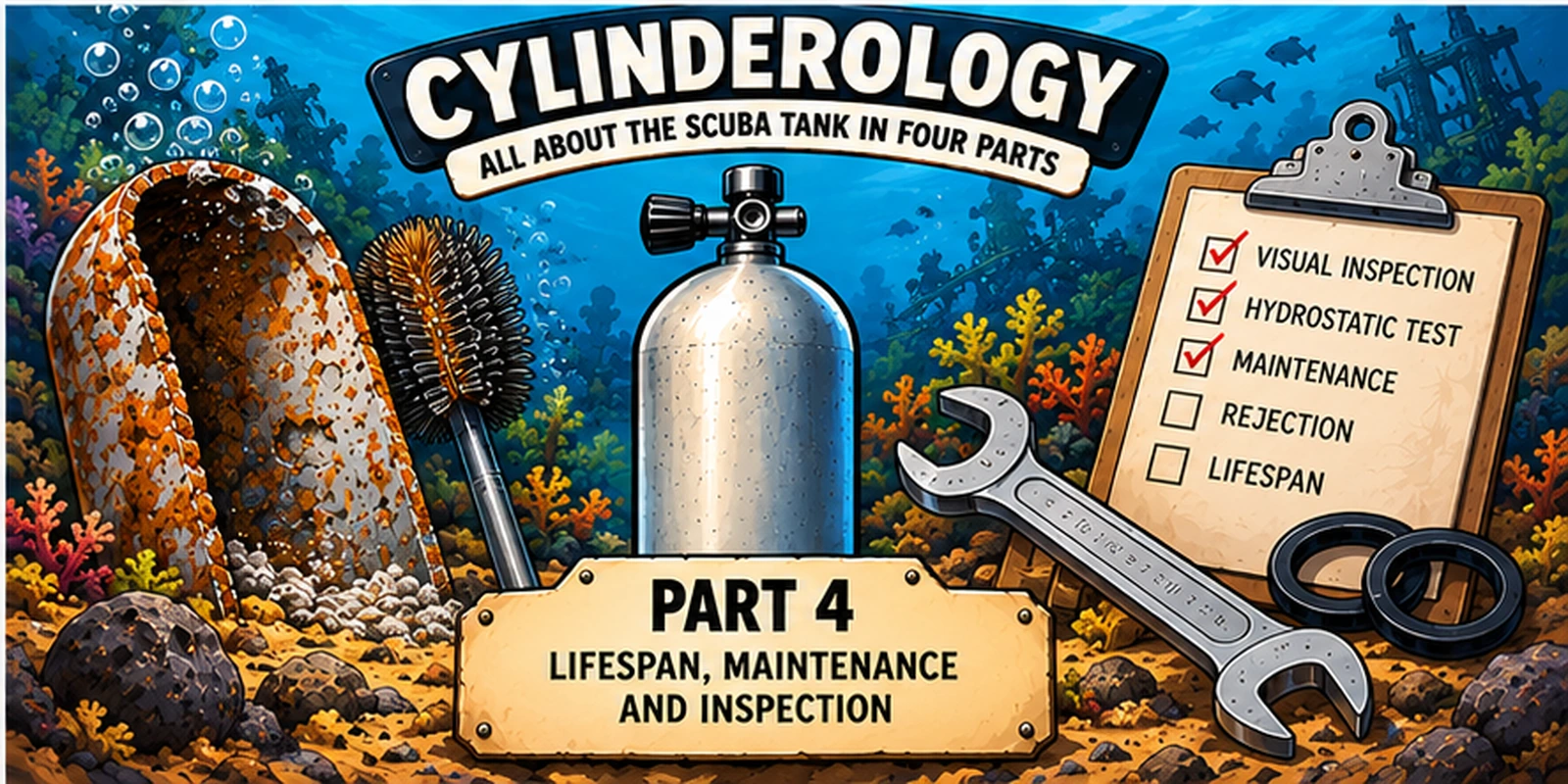
How Long Does a Diving Cylinder Last? Maintenance, Inspection, and Retirement

Every diver knows the diving cylinder. It might be the most trusted part of our equipment: a sturdy metal cylinder filled with breathing gas, which we carry on our back and to which we attach our regulator. We know how much air it holds and roughly how long we can dive with it. But how much do we really know about the cylinder itself? How long does a diving cylinder actually last? What happens when saltwater, corrosion, and years of use leave their marks? How does an inspector uncover hidden damage, and why is a diving cylinder subjected to water pressure far exceeding its normal working pressure during a hydrostatic test? In this final part, we follow the lifecycle of a diving cylinder: from daily maintenance and periodic inspections to the moment it is definitively rejected and perhaps given a second life. This is the fourth and last part of a four-part series about the diving cylinder. Welcome to the final lesson in cylinderology.

40 min read
Deel 3 van de vierdelige serie Cilinderologie: Onder hoge druk – De veiligheid, markeringen en kranen van duikflessen
Technical Tales

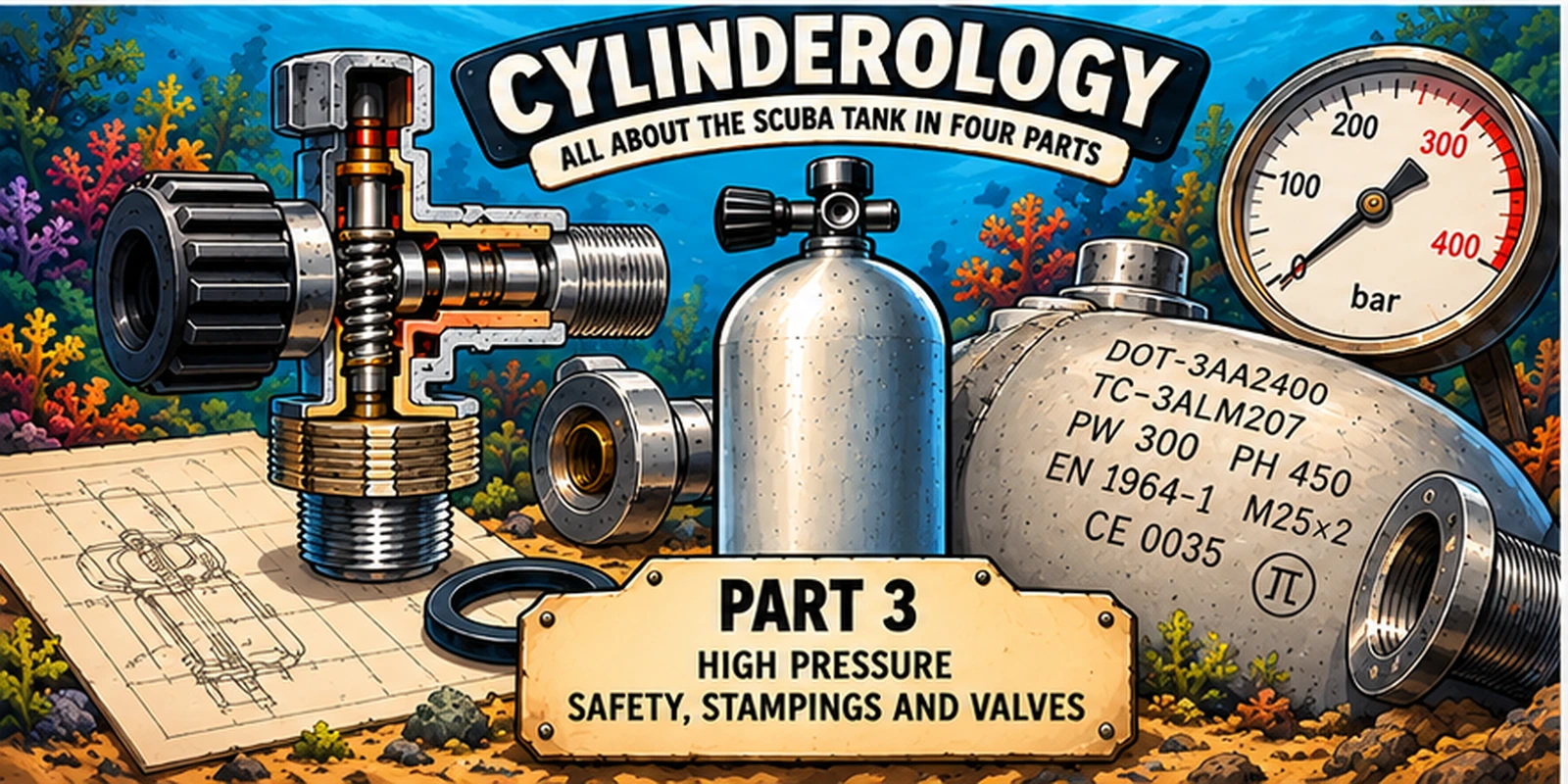
Under High Pressure – The Safety, Markings, and Valves of Diving Cylinders

Every diver knows the diving cylinder. It may be the most familiar part of our equipment: a sturdy metal cylinder filled with breathing gas, which we carry on our back and to which we connect our regulator. We know how much air it contains and roughly how long we can dive with it. But how much do we actually know about the cylinder itself? How safe is a diving cylinder that stores air under a pressure of 200 or even 300 bar? What is the difference between working pressure, test pressure, and burst pressure, and what safety margins do manufacturers maintain? What do all those letters, numbers, and symbols on the shoulder of a cylinder mean, and why do some cylinder valves fit one cylinder but not another? In this third part, we examine the technical standards, safety features, and connections that ensure a diving cylinder can be safely filled and used. This is the third part of a four-part series about diving cylinders. Welcome to the third lesson in cylinderology.

70 min read
Deel 2 van de vierdelige serie Cilinderologie: De duikfles begrijpen – Van liters en cubic feet tot drijfvermogen
Technical Tales

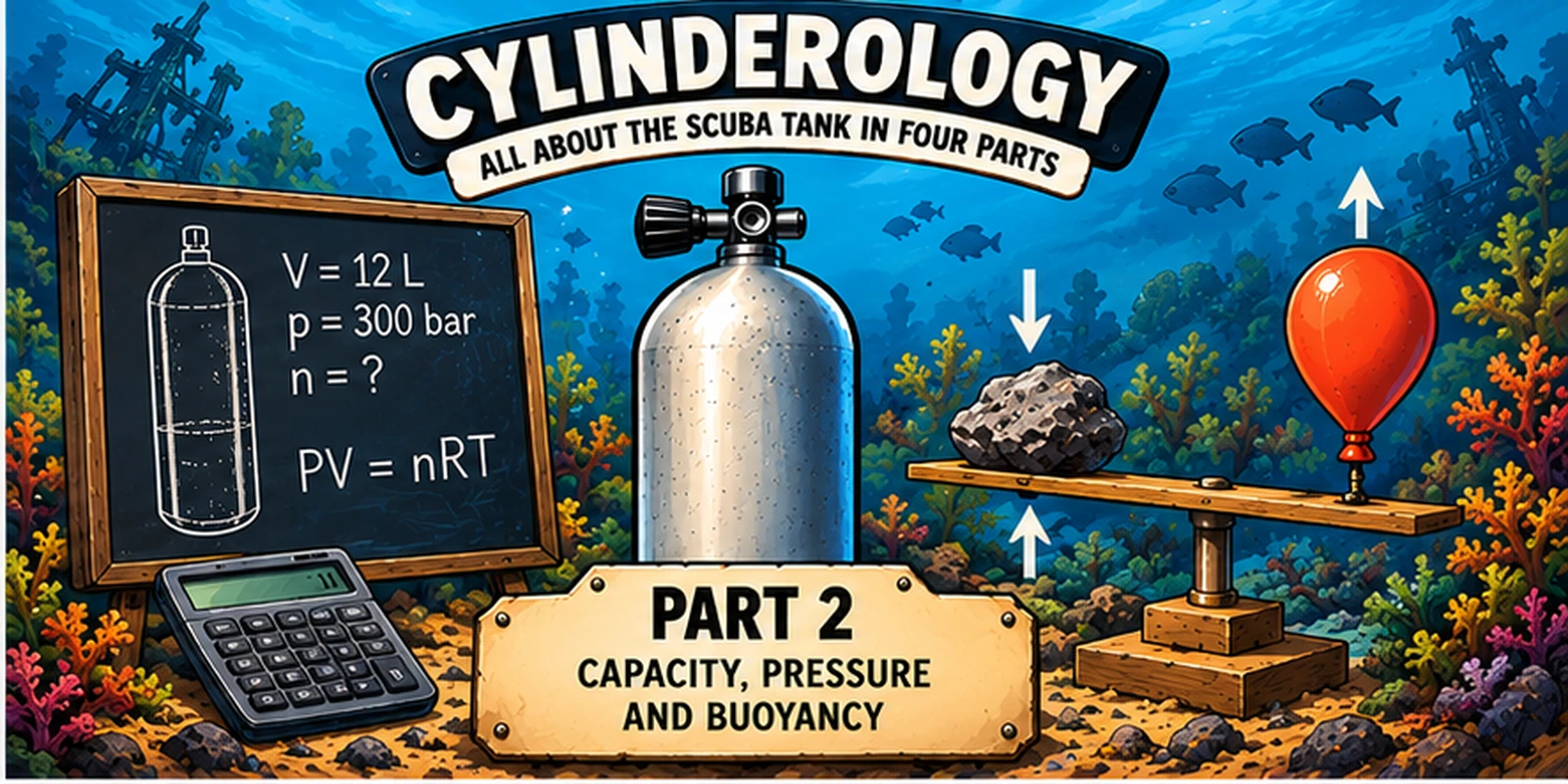
Understanding the Diving Cylinder – From Liters and Cubic Feet to Buoyancy

Every diver knows the diving cylinder. It might be the most familiar piece of our gear: a sturdy metal cylinder filled with breathing gas that we carry on our back and attach our regulator to. We know roughly how much air it holds and how long we can dive with it. But how much do we really know about the cylinder itself? How much breathing gas does a diving cylinder actually contain? Why do we use liters in Europe and cubic feet in America, and why does a cylinder at 300 bar provide less gas than you might expect? What different cylinder sizes exist, and why does the buoyancy of an aluminum cylinder change during the dive differently than that of a steel cylinder? In this second part, we dive into the physics behind the diving cylinder and discover how volume, pressure, weight, and buoyancy are interconnected. This is the second part of a four-part series about the diving cylinder. Welcome to the second lesson in cylinderology.

45 min read
De duikfles – Van Franse uitvinding tot moderne hogedrukcilinder
Technical Tales

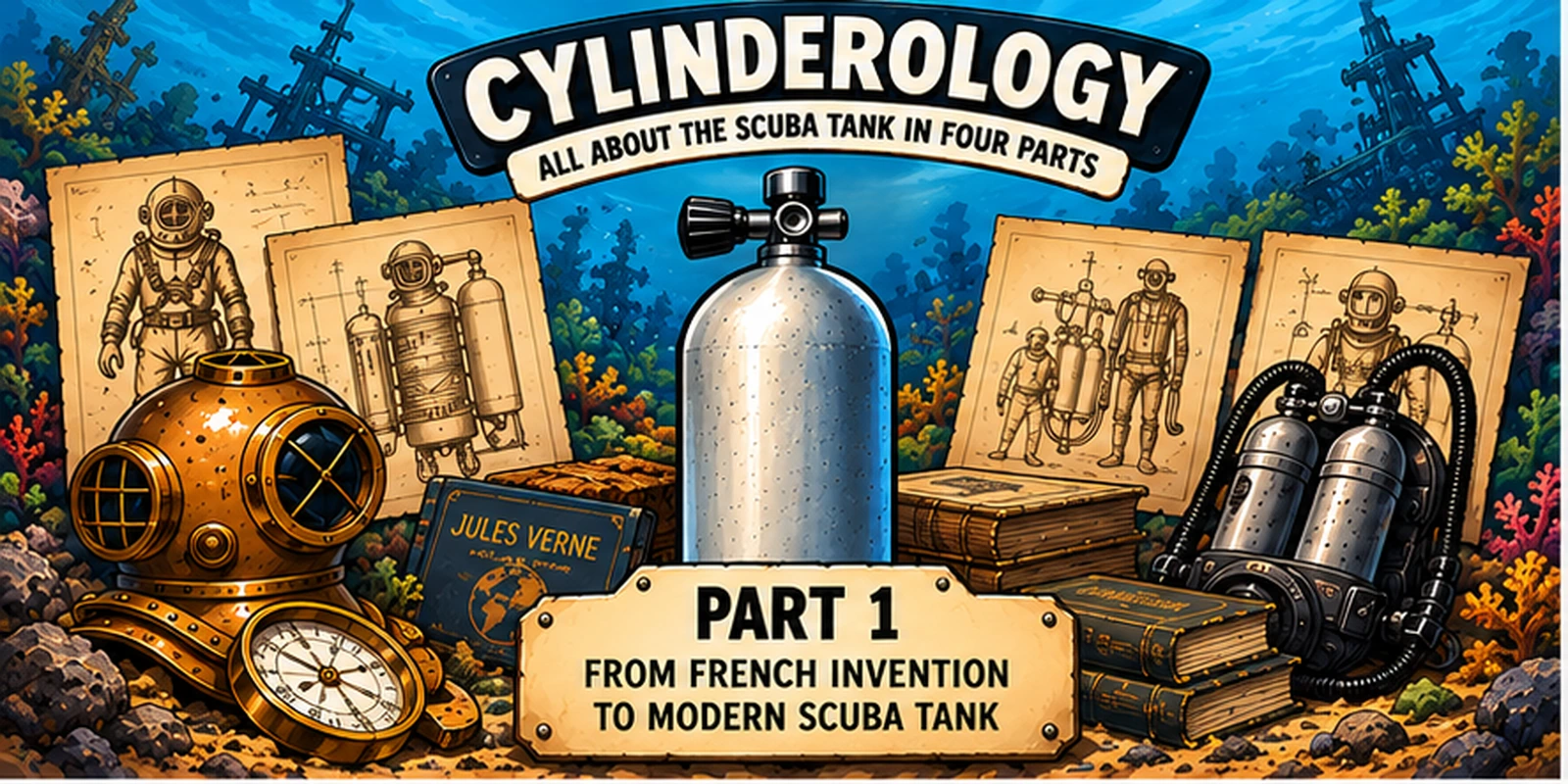
The Diving Cylinder – From French Invention to Modern High-Pressure Cylinder

Every diver knows the diving cylinder. It is perhaps the most familiar part of our equipment: a sturdy metal cylinder filled with breathing gas, carried on our back and connected to our regulator. We know how much air it holds and roughly how long we can dive with it. But how much do we actually know about the cylinder itself? How did the modern diving cylinder come about? Who conceived the idea of taking compressed air underwater, and how did the first pressure vessels evolve into the cylinders we use today? Why are some diving cylinders made of steel and others of aluminum, and how is such a strong, seamless metal cylinder actually produced? In this first part, we follow the history of the diving cylinder, from the first French inventions to modern production processes and materials. This is the first part of a four-part series about the diving cylinder. Welcome to the first lesson in cylinderology.

35 min read
De verschillende ademgassen voorbij perslucht
Foundations

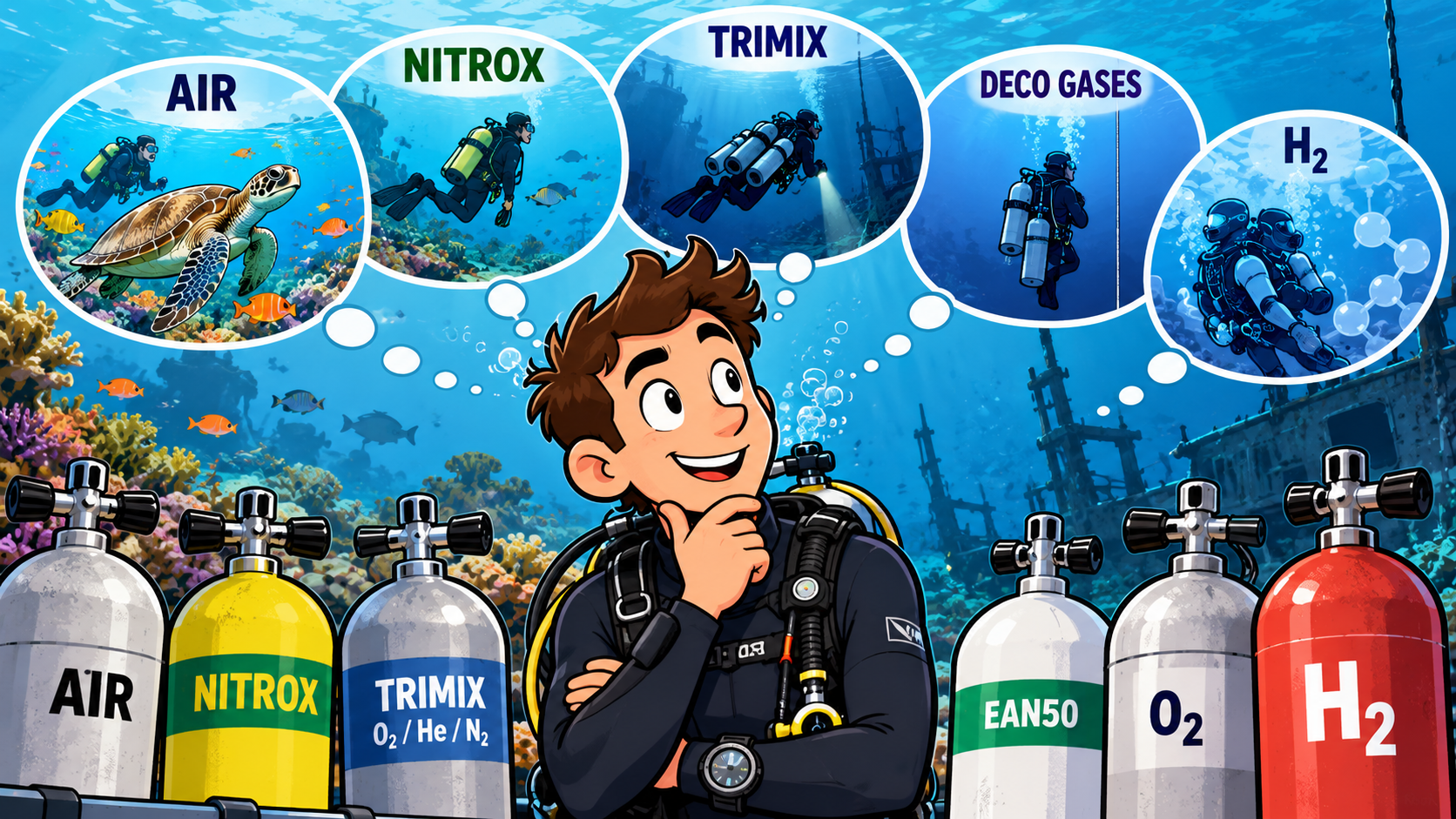
Beyond Compressed Air: From Nitrox to Hydrogen, or Why Divers Use Different Breathing Gases

Ordinary compressed air is ideal for many dives, but for certain dives other breathing gases are used, such as Nitrox (air enriched with extra oxygen) and Trimix (a mixture of nitrogen, oxygen, and helium). In this article, we trace the development of diving through these breathing gases: from the rise of Nitrox to experiments with hydrogen-containing mixtures for extremely deep dives. We discuss applications of different gases, methods for mixing, analyzing, and identifying gases, and the related training. This is not a practical manual, but an accessible guide to the gas physics and chemistry behind every dive.

45 min read
Een nieuw project
Behind the scenes

How Hard Can It Be? The Story Behind Air & Dive Supply

Starting your own scuba tank filling station. How hard can it be? When we decided to establish Air & Dive Supply together, we knew surprisingly little about compressors, buffer tanks, and breathing air production. What we did have, however, was some rather painful experience with just about everything that could possibly go wrong. This is the story of two stubborn entrepreneurs on Curaçao, a series of expensive lessons, and a shared ambition to do things better.

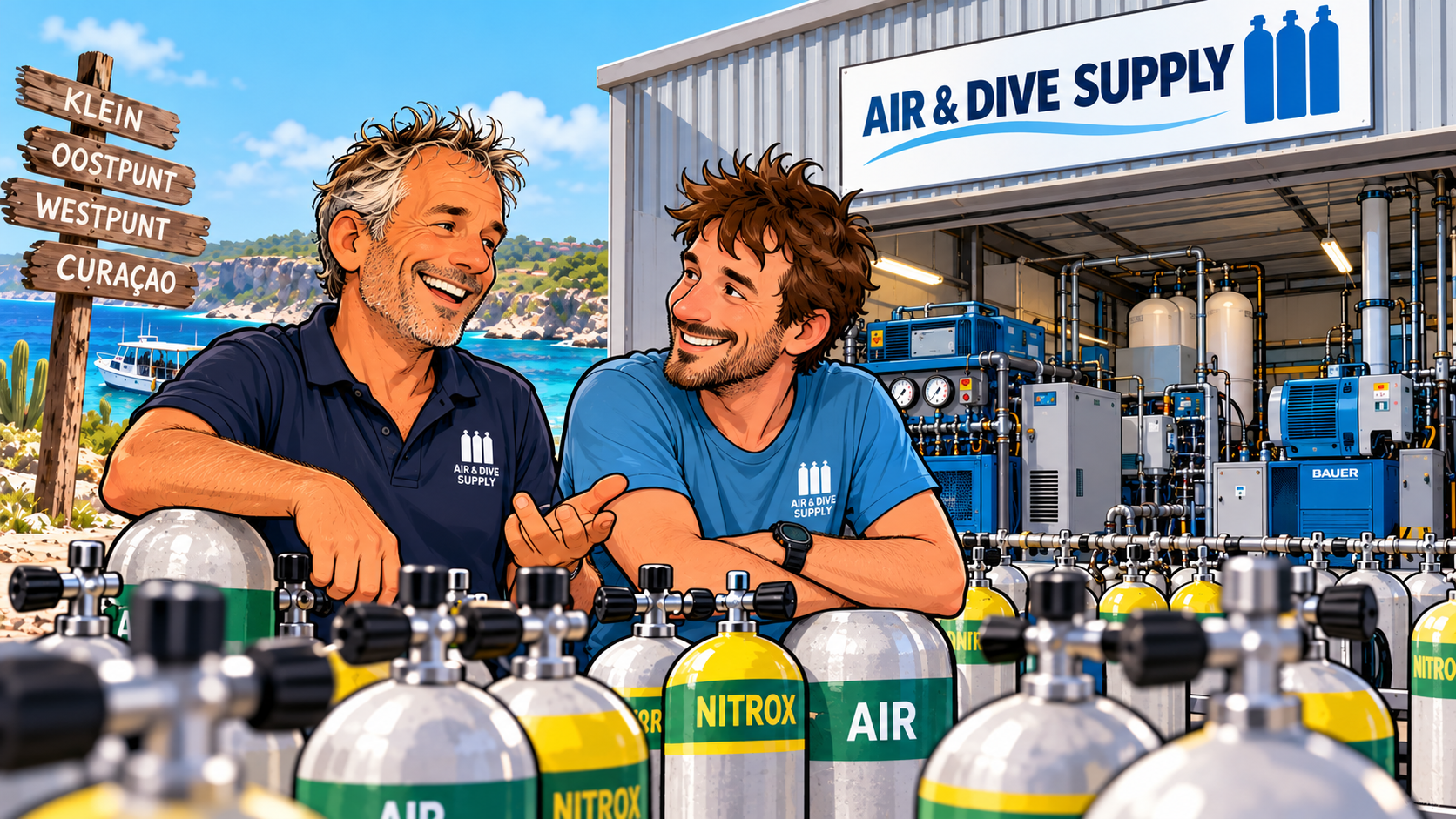
20 min read

STAY CURIOUS

Good air starts with a good conversation.

A question about an article, our filling station or breathing air? We would love to hear from you.

Get in touch
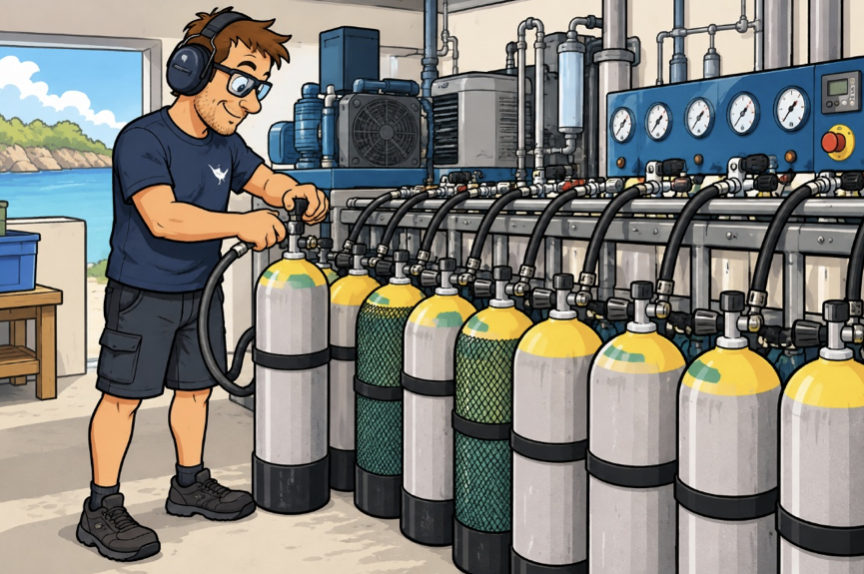
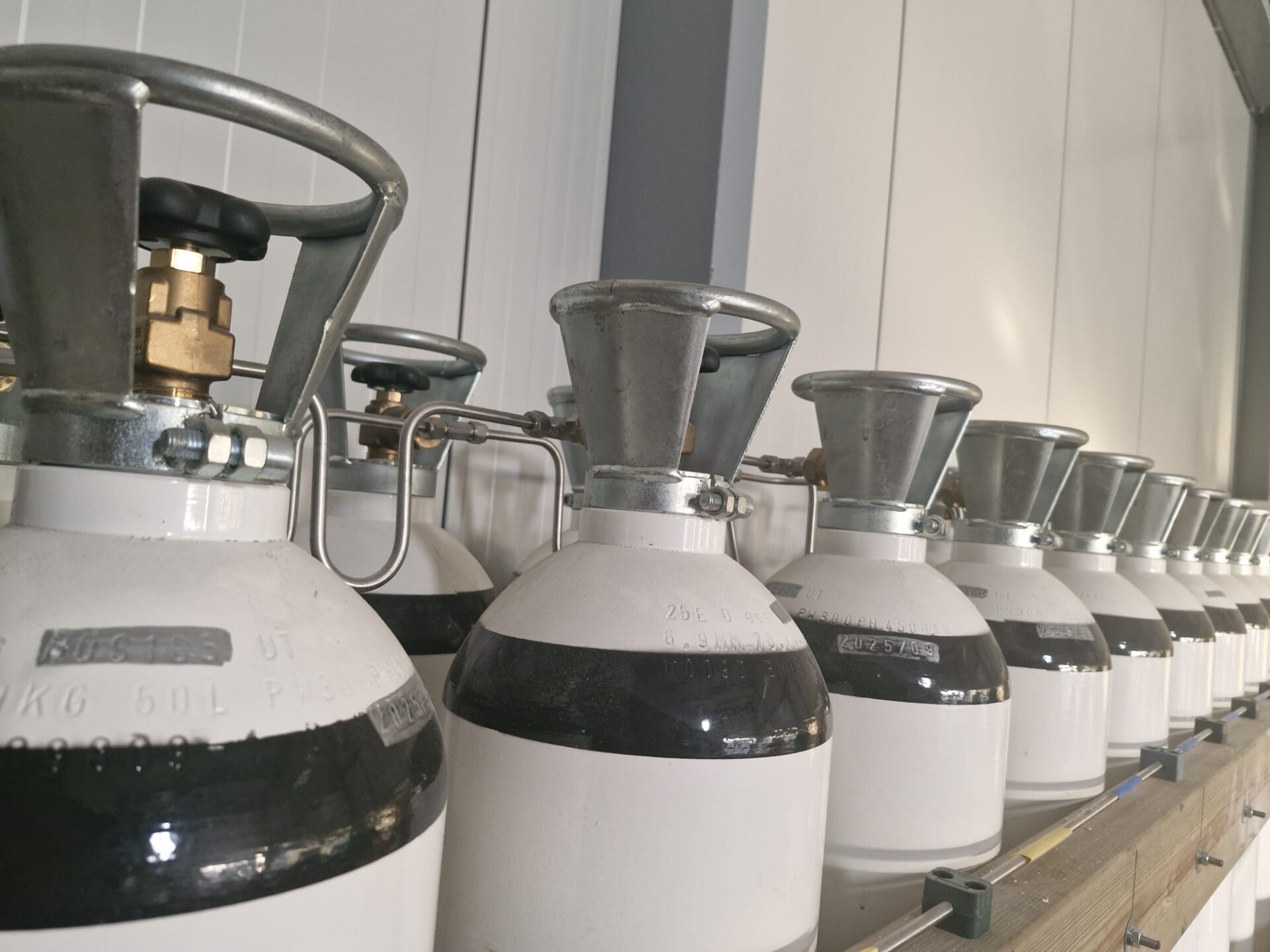
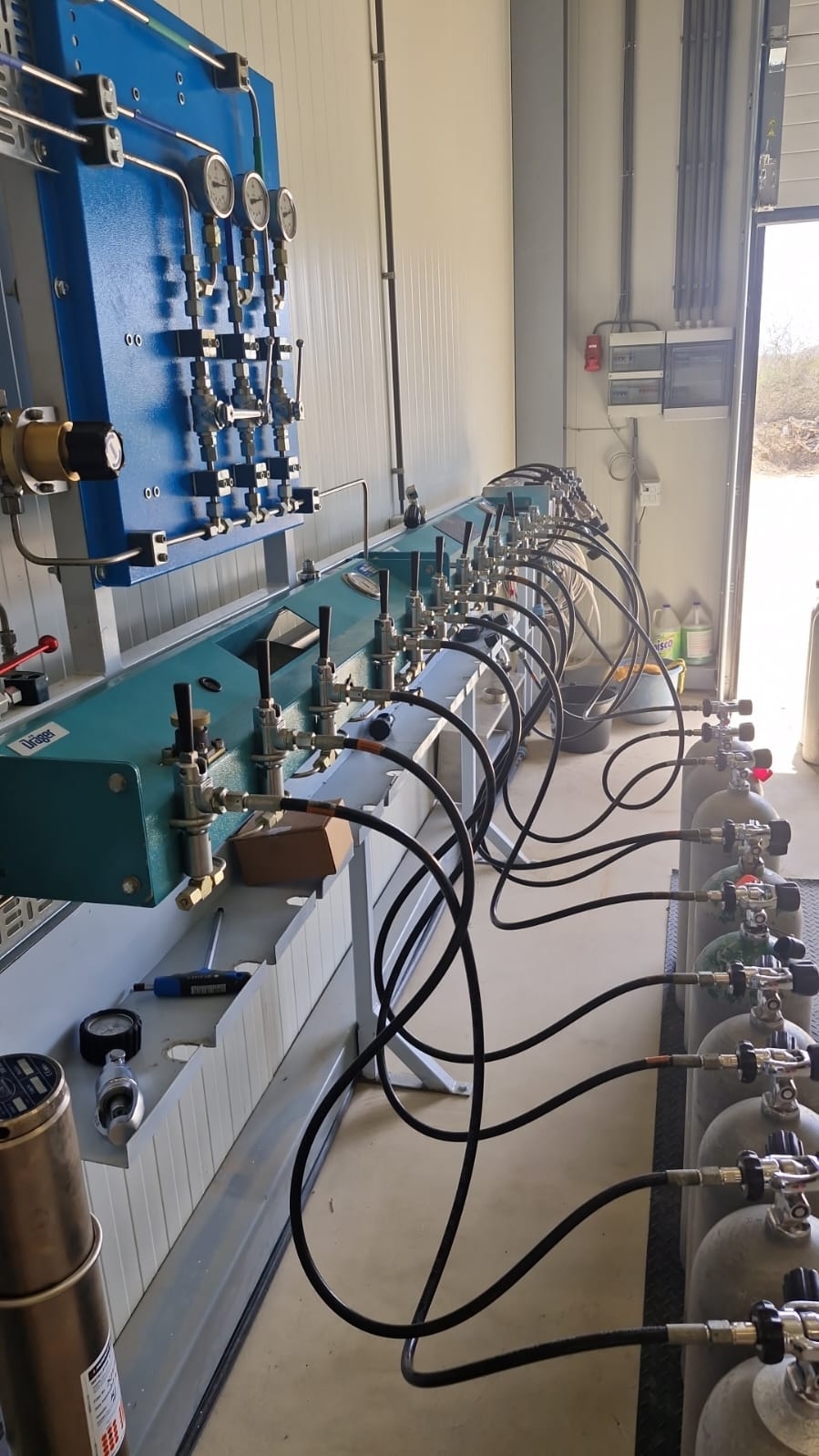
Duikflessen bij het vulstation
LIONFISH INVADERS
Air & Dive Supply/Take a breather THE REEF ARCADE · 001

✳ SMALL BREAK. BIG MISSION.

LIONFISH INVADERS↗

Grab your spear. Protect the reef. And remember to breathe.

BUILT FOR DIVERS8-BIT. 100% OCEAN.CURAÇAO, CARIBBEAN SEA
SCORE00000
BEST SCORE00000
WAVE01
LIVES♥ ♥ ♥
DIVE INTO THE ARCADE

THE REEF NEEDS
A HERO.

An underwater invasion. One diver. Your spear.
Ready to dive into the deep?

or press Enter to start
12°07′ N   68°56′ WDEPTH 18 M
Ready to dive
No downloads. No accounts. Just diving.MADE OF SALT, PIXELS & A LITTLE COMPETITION.
AIR & DIVE SUPPLY / THE ARCADE

CURAÇAO DELIVERY DEPARTMENT · EST. 8-BIT

TANK RUN↗

Full tanks. Happy divers. One truck to make it happen.

HANDLE WITH CAREPRECIOUS AIR
ON BOARD
↓ THIS WAY UP ↓
SCORE00000
RECORD00000
ROUTE01 / 05
CARGO0 / 4
01 PICK UP→02 FILL→03 DELIVER
THE ISLAND IS COUNTING ON YOU

KEEP THE
AIR MOVING.

Pick up. Fill up. Deliver.
A small truck with a big responsibility.

5 ROUTES · NO WEAPONS · PLENTY OF WORK
01 · MARINA
0%
TRUCK 100%
FUEL 100%
ENGINE 20°C
● Ready for the first run
● PICK UP → FILL → HAPPY DIVERSMADE OF SALT, PIXELS & PRECIOUS AIR.